On Engineered Food and Nanotechnology

My dear ones,
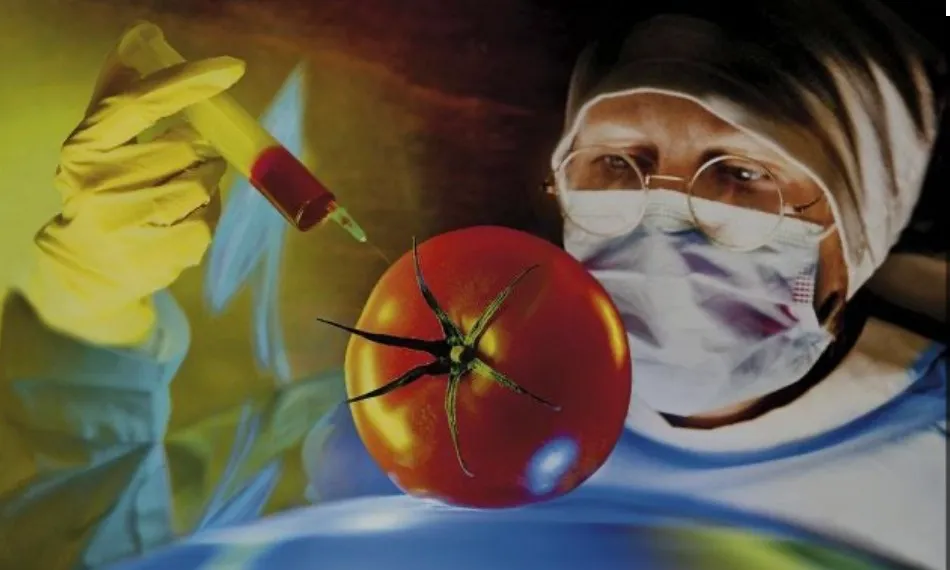
Does engineered food stress you out?
Well, here's the next thing: nanotechnology is already in your supermarket.
Nanotechnology is measured in billionths of a meter and spans every aspect of life, from food to medicine, clothing and space. Imagine hundreds of microcomputers the width of a strand of hair, programmed for specific tasks.... in your body.
Sounds good?
Engineering at the molecular level may be the fulfillment of a future dream for corporations; however, there are few long-term studies on nanoparticles inside your body, especially where health problems are concerned. Despite this huge new revenue stream, there is a growing body of toxicological information indicating that nanotechnology, when consumed, could cause brain damage, and it should therefore undergo a full safety assessment, and not by the government…
that nanoparticles pass through the skin the way you walk through your front door, which points to a potential unnatural interaction with the immune system, or when nanoparticles penetrate the bloodstream. Some sunscreens on the shelf today, for example, contain nanoparticles that can penetrate the skin and move between organs, with unknown health effects. Nanoparticles in cosmetics have very few regulations made by the FDA, an organization meant to protect us that in practice protects its sponsors: the industry.
Thomas Faunce of the Australian National University, who holds an Australian Research Council fellowship examining the health issues of nanotechnology, said a decade ago that research findings are significant and strengthen the case for mandatory labeling, and that strict safety data should be required from manufacturers. Studies show that nanoparticles have the ability to damage living cells, and the precautionary principle should be applied.
He said...
In 2005, The Helmut Kaiser Consultancy Group, global leaders in pro-nanotechnology, stated that about 300 nanofood products were available on the market worldwide, estimating the market in the US alone to be worth $5.4 billion. That was already twenty years ago.
In 2015, a decade ago, nanotechnology was already being used in 40% of food industries. By 2040, nano-produced food that keeps the same taste and texture as organically produced food will be routine, the norm.
They've been quietly getting us used to nanotechnology for twenty years now.
Clearly, nanotechnology is already in some foods and cosmetics (including anti-aging products and sunscreens). “Smart” packaging and tracking are everywhere. Invisible nano coatings (invisible to the naked eye and to some microscopes) can track not only the food but also whatever ate that food: your body.
And don't expect an informative label about nanoparticles on your products anytime soon, because this has already existed for twenty years and no one bothered to inform you.
Where is the public debate about labeling nanoparticles in your food and cosmetics, and about the risks?
There probably isn't one.
And while people debate labeling genetically engineered food (GMOs), the train has long since moved on to the next station and beyond, into the micro-nano realm…
When starving lab rats are given a choice between organic potatoes and GMO potatoes, they go straight for the organic ones. When they are given only the GMO potato, they will eat it, or starve to death... (studies showed severe damage afterward).
What do rats know? And what do you know?
And let's say you know this information. Everything you know disappears when you're hungry….
Get it?
So the next time you reach for something you're told is “smart”... think about what that really means.
Learn what you can about where everything you put in or on your body comes from.
Knowledge is power only when it is applied.
With love,
Ran
A new article every week, straight to your inbox.